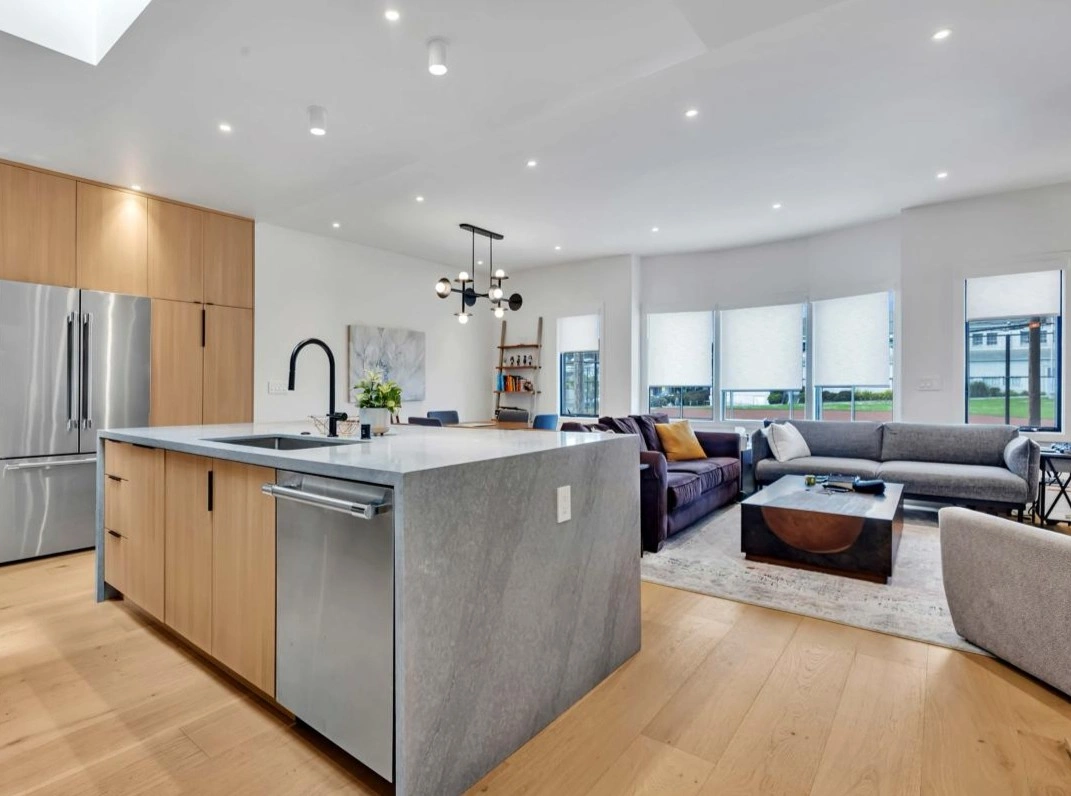
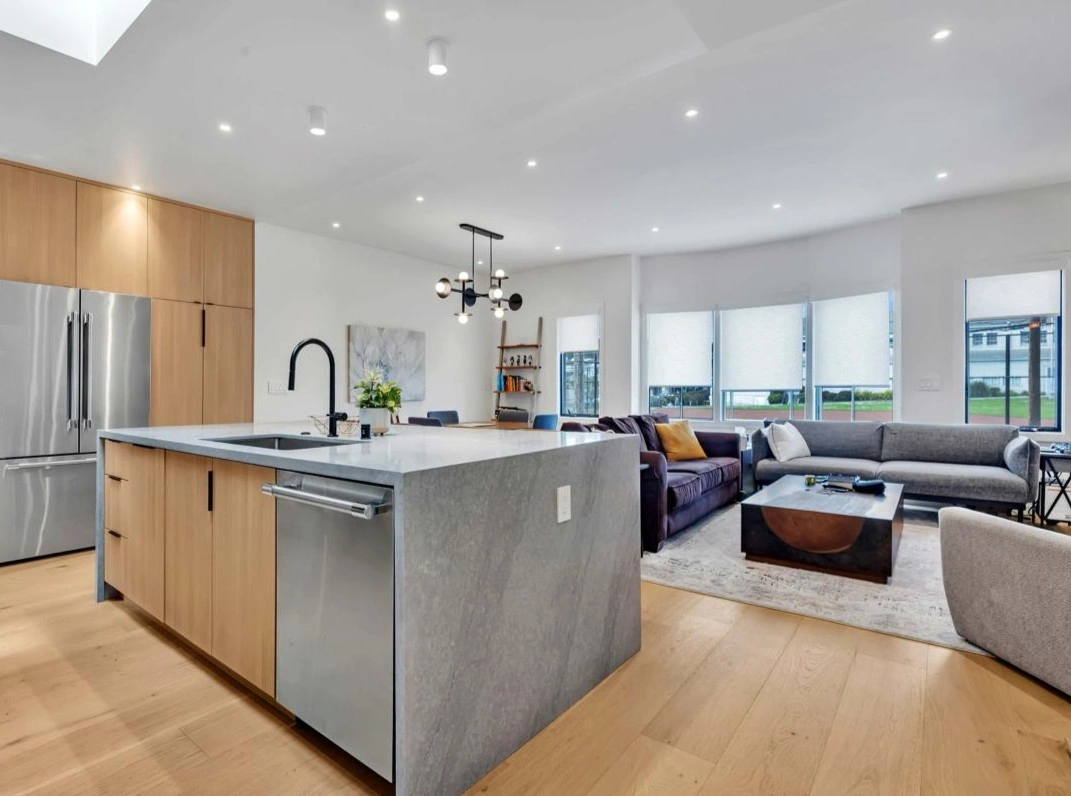
Custom cabinetry can solve problems that stock or semi-custom systems cannot, but paying more only makes sense when the kitchen actually benefits from the flexibility, construction or finish level.
Custom cabinets are most valuable when the room has unusual dimensions, highly specific storage needs, integrated appliances, architectural constraints or a design that depends on exact proportions. In a straightforward kitchen, a strong semi-custom system may deliver most of the functional benefit for less.

Pay for custom when the space needs custom
Older Bay Area homes rarely behave like perfect rectangles. Walls can be out of square, ceilings may vary and windows or doors may limit standard cabinet runs. Custom dimensions can reduce fillers and awkward gaps while making better use of a difficult room.
Custom is also useful when the design needs appliance panels, unusual depths, specialty finishes, furniture-style details or storage built around how the household actually cooks.
| Cabinet approach | Best fit | Main tradeoff |
|---|---|---|
| Stock | Straightforward dimensions and controlled budgets | Fewer sizes, finishes and modifications |
| Semi-custom | Most full remodels needing flexibility | More options but still system-based |
| Custom | Unique dimensions, integrated details or design-led work | Higher design, fabrication and installation cost |
| Refacing | Sound existing boxes with a workable layout | Does not solve poor cabinet configuration |
Construction quality is separate from the word custom
A cabinet can be custom and still be poorly designed or installed. A semi-custom cabinet can be durable, well built and appropriate for the project. Compare box construction, hardware, drawer systems, finish quality, warranty and installation rather than relying on the category name alone.
Installation matters because even excellent cabinets can look poor when doors are misaligned, panels are incomplete or the layout was not field-verified.
The budget should protect function before decorative complexity
Spend first on the layout, durable construction, drawers and storage used every day. Decorative panels, specialty interiors and highly detailed millwork can then be added selectively.
A kitchen often feels more expensive because the proportions and installation are coherent, not because every cabinet contains a premium accessory.
Questions to answer before paying for custom cabinets
Before making the decision, it helps to separate the visible design choice from the field conditions, responsibilities and trade work that sit behind it. These are the checks our remodeling team would want resolved before the scope is locked:
Price the cabinet plan you actually need in both semi-custom and custom systems. The useful comparison is not category versus category; it is the same functional design delivered two different ways.
Common mistakes that make this decision more expensive
Most avoidable problems come from assumptions that survive too long. The following mistakes are worth resolving while the project is still on paper:
- Choosing custom before the layout is stable: Expensive drawings do not fix an unresolved plan.
- Buying accessories instead of storage strategy: More inserts do not automatically create better organization.
- Ignoring installation quality: Cabinet value is lost when fitting and alignment are poor.
- Assuming custom guarantees resale value: Buy for function, durability and fit rather than an automatic return.
Where custom earns its place
A Bay Area kitchen has an angled wall, a narrow passage and a refrigerator that needs integrated panels. Standard sizes create large fillers and compromise drawer widths. Custom cabinetry uses the irregular dimensions more efficiently and aligns the refrigerator and tall storage as one composition. In this case, the extra cost solves visible and functional problems rather than simply adding a premium label.
How this decision fits into the full kitchen project
Our Bay Area kitchen budget guide shows why cabinetry is often one of the largest budget categories. If cabinet design, appliance integration and installation need to be coordinated with the rest of the room, Together Home Remodeling’s kitchen remodeling team can evaluate those decisions as part of the complete project.
At Together Home Remodeling, we look at these choices in relation to the room that exists, the household using it, the permitted scope, the selected products and the construction sequence. That prevents one isolated upgrade from creating avoidable work somewhere else in the kitchen.
Experience-based planning: Bay Area homes vary in age, access, framing and existing systems. Final recommendations should follow field measurements, product specifications and a project-specific review rather than a generic online rule.
Frequently asked questions
Are semi-custom cabinets good enough for a high-end kitchen?
They can be. The answer depends on construction quality, available sizes, finish options and how well the system supports the design.
Do custom cabinets always use better materials?
No. Custom describes flexibility and fabrication, not a universal material standard. Review the actual specifications.
What should I prioritize if the cabinet budget is limited?
Prioritize a workable layout, durable hardware, useful drawers and good installation before decorative upgrades.
The bottom line on custom kitchen cabinets
Custom cabinetry is worth the premium when customization solves a real constraint or supports a design that standard systems cannot execute cleanly. If the room works well with a quality semi-custom line, spending the difference elsewhere may produce a stronger overall kitchen.